Showing posts with label hope. Show all posts

Tuesday, September 25, 2012

Rest & Retreat

I had a sweet weekend retreat at my favorite little place in Pretoria North, Mohale Rest & Retreat.  Wanted to share this poem that particularly touched my heart & soul...

"For Solitude" by John O'Donohue

May you recognize in your life the presence,
Power and light of your soul.

May you realize that you are never alone,
That your soul in its brightness and belonging
Connects you intimately with the rhythm of the universe.

May you have respect for your individuality and difference.

May you realize that the shape of your soul is unique,
That you have a special destiny here,
That behind the facade of your life
There is something beautiful and eternal happening.

May you learn to see yourself
With the same delight,
Pride and expectation
With which God sees you in every moment.

Excerpted from:  To Bless the Space Between Us: A Book of Blessings by John O’Donohue (Doubleday, 2008)

I loved the poet's reminder that no one is part of a solitary story -- we are all part of a bigger picture than we can see.  I loved the glimpse of our lives being just a facade for something beautiful and eternal going on, often behind the scenes.  And it brought hope & joy to my heart to read that last stanza.  Like my parents, God loves to show me off!  It's amazing that "in every moment" God sees us with delight and pride.  

Amen!

Thursday, January 12, 2012

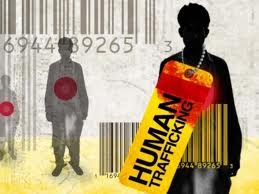
Human Trafficking -- A Redemption Story

I had been wanting to post this story since Sunday, and I just found out that yesterday was Human Trafficking Awareness Day (thanks to my friend, Emily!)  So, that makes this post all the more timely.

So, as you probably know, our team volunteers at a local government-run facility for orphans and youth who have been removed from unstable home situations.  This particular facility previously housed a juvenile detention center, so many people still see it as the place for bad kids.  While part of our ministry there is to encourage and affirm the kids by pointing them to God's love, I also feel like another aspect of our involvement is to serve as a prophetic witness to our neighbors.  The fact that we willingly spend our time there and can speak of the kids beyond the typical characterization as "naughty" is quite remarkable to many people.  The kids who end up at this center mostly come from Gauteng Province, but some come from other parts of South Africa and even other African countries.

This story is about a girl, we'll call her Mary, who arrived at the center several months ago from a country in East Africa.  You see, Mary was an orphan in her home country.  I don't know the full story, but from what I've heard, a nice neighbor approached Mary and whoever was taking care of her and offered to bring her to South Africa for a better education.  Mary had been trying to attend school and take care of her younger siblings.  I'm sure the opportunity sounded appealing to Mary -- it was probably a bit scary too, but it was a chance at a new future! Or, maybe Mary didn't even know what was promised and was just told to go without asking any questions.  So, Mary went with this neighbor.  When they arrived in South Africa, Mary learned that she was actually part of a deal with an older South African man who wanted to take her as his wife. Mary is14 years old.  So, this neighbor who had fed Mary on hopes of a new life was now handing her over to this strange man -- not quite the future that Mary had imagined.  This is no way for a 14 year old girl to live, and Mary knew that.  So, she somehow escaped the man's possession and sought refuge at the Catholic church that she had attended with the neighbor when she first arrived in South Africa.  Oh yeah, one more thing -- Mary didn't speak a word of any South African language.  Why would she?  So, she found someone at the church who could translate to the priest and explain her situation.  The priest contacted the officials and thus, Mary ended up at the facility where my team volunteers.

The story gets better.  I met Mary after she arrived at the Center, but she was shy and hesitant because she couldn't speak the local language.  As I've learned -- if  you can't speak the local language here, it can feel like you're on a different planet!  You have no idea what's going on around you and you can't share your feelings, confusions, or questions with anyone.  And most of the kids who suddenly became her dorm-mates were probably unfamiliar with a peer from another country, so what could they do?

My teammate Luc and I went to the facility this past Sunday to support them as they resumed their regular Sunday church services for the kids.  Since it was the first Sunday of the year, several kids got up to share their testimonies of what God had done in the past year, or resolutions they were making for change in the new year.  And then, Mary came up to the stage.  Luc accompanied her because, by God's amazing providence, he also speaks the same language as Mary.  Ever since Mary arrived at the Center, Luc's presence has been like a beacon of hope to her -- I imagine a very real demonstration to remind her that God had not forgotten her.  You could tell Mary was still feeling shy, but there was also some spark about her, like something inside she just needed to let out.  She proceeded to tell her story, through Luc.  She arrived at the Center not knowing anyone or anything about the place.  She was totally alone.  Even though she had been in grade 9 in her home country, the staff placed her in grade 6 at the school on the premises.  She struggled, she said, because she couldn't understand what the teachers were saying or teaching.  The only thing she understood was math, because "the numbers speak for themselves."  She said the teachers were gracious, spending extra time trying to help her understand.  She reached out to another child and somehow, despite their lack of common language, they were able to communicate and help each other.  The smile on Mary's face continued to get bigger and bigger as she told her story.  You could tell that this was something she was meant to share.  By the end of the school year, Mary said, she had passed all her subjects and now she'll be going on to grade 7.  This is amazing!  I sat there, my heart welling up with joy and awe.  It was an encouragement to me, also still feeling like such a foreigner in this place, that Mary came and not only figured some things out, but learned how to thrive in such a strange new place.  That's a tall order for any 14 year old, not to mention all that she had experienced to bring her to that point.

It was only after Mary shared her story on Sunday that I learned the previous parts of her journey.  And that just made the latter chapter all the more amazing -- just think about what could have happened to Mary.  And although visiting the Center is not always filled with pictures of hope and encouragement, on this day it was.  Sure, most of the kids there wish they were with their real families, but Mary was experiencing the redemption of God on a daily basis.  He had taken her situation, with the deception, death, and injustice it carried, and was turning it into something beautiful, in a place where Mary could succeed and discover who she was made to be.  I was filled with hope as I thought about Mary's story and what else God might do through her.

Some good sites to check out regarding the fight against Human Trafficking:
International Justice Mission
Not for Sale
Slavery Footprint

Friends blogging about Human Trafficking:
Emily
Amanda

Thursday, May 05, 2011

Reflections on Holy Week

…hey, better late than never, right?

I observed Holy Week this year by reading through each day’s Scriptures that corresponded to the last week of Jesus’ life on earth.  I’m not sure if I had ever done that before, but I found it to be very powerful this year. 

Palm Sunday:  Mark 11.1-11
Jesus comes riding into Jerusalem, triumphantly, on… a donkey.   He knows exactly what he’s entering into, and he knows that this scene begins the end of his time on Earth.  Lord, let us reflect your humility.  Let us not insist on our own privilege or position or power.  Let us live in light of the victorious king who came in on a donkey.  Let your light speak for itself through our lives.  “Rescue us! Blessed is the One who comes in the name of the Lord!”  Let our praise be genuine, surely rooted even when our troubles appear more real than your presence.  Lord, let us reflect your mercy; that of a God who loves a fickle people, who was faithful to the ones that he knew would desert him.  Let us not work for the praises of people, but for the fruit which lasts forever.   

Holy Week Monday:  Mark 11.12-19
Rough day for Jesus—first the curse on the fig tree, then turning over tables in the temple.  What Jesus really wants to see from our lives is fruit – and not just the appearance of fruit.  Here we have a tree with leaves, seemingly a sign of produce.  But, it bears no figs.  And then Jesus goes to the temple and sees pilgrims being exploited and priests acting authoritatively while God’s house is disrespected.  Jesus can see past our appearances to our heart.  He warns against being white-washed tombs and in this case against being a fruitless tree.  He is the one who grows fruit in our hearts, but we must submit to his pruning and cultivation.
The other thing is the irony of our plans vs. God’s—the priests started to plot Jesus’ destruction after the table-turning but Jesus already knows it is coming.  Their fear of him and his influence over the crowds, their fear of losing power and influence for their own sake, push them to want to destroy him.  Do I fully allow Jesus to influence all my life or do I still try to hold on to some of my own influence and control?  Lord, I want to give you free reign over my life.

Holy Week Tuesday:  Mark 11.20-13.37
Jesus reminds his disciples to trust God, and pray without doubting.   I’d say most of my prayers are not doubtful, but I think I have a hard time praying for REALLY big and miraculous things, believing they will happen.  My instinctive cynicism creeps in when I read “Whatever you pray for or ask from God, believe that you’ll receive it and you will.”  That statement doesn’t seem confusing or difficult to understand, but my faith in this regard is unfortunately limited to what I can see.  But, it’s a good thing that the One who answers prayers sees beyond my sight. 
The rest of the day is filled with priests and teachers trying to stump Jesus with various questions about the law and His interpretation of them.  Of course, they don’t succeed. 

Holy Week Wednesday: Mark 14.1-11
Wherever the good news is told, this story of the woman anointing Jesus with her perfume will be told.  I must be careful to not just take a short-sighted practical view, like the dinner guests in the story.  She lavishly “wasted” her resource, all to adore Christ.  Lord, help me to be so lavish, to adore you so freely and fully, without being discouraged at what others might think.  Allow me to use my resources to worship you, beyond mere practicality.  Help me to see the long-view and seek your Kingdom first.  Transform my perspective to be more like Yours. 

Maundy Thursday: Mark 14.12-72
Jesus and his disciples celebrate the Passover feast, remembering God’s historical deliverance, but Jesus also knows it is about to have new meaning.  Communion is instituted at this meal while Jesus knew he was eating with his betrayer.  He also knew all his disciples, his closest friends, would desert him in his time of most need and he felt the angst and distress of the task that lay before him.  But he was fully surrendered to God’s will—it is for this reason He has come.  Armed guards lead him to the priests—the irony of their attempts at “judgment”; no witnesses against Him because all his claims are true.  He offers no self-defense.  He is who He says He is!  But in efforts of their own self-justification, the leaders must destroy Him since he reveals their hypocrisy.  Lord, help me to be so surrendered to your will.  I don’t generally know what’s coming next but even in this situation, in the worst of events when Jesus knew exactly what lay before him, he surrendered.  Please help me to rely on You as my defense—not defending my rightness, but Your authority, as it brings repentance, forgiveness, mercy, justice, power, love, and Jesus’ righteousness. 

Good Friday: Mark 15.1-47
The curtain was torn in the moment of Jesus’ death.  To those still confused, not seeing the deeper meaning, this might seem terrible.  And even in Jesus’ pain, this tearing which was accomplished was beautiful!  Yes, it disturbed temple tradition but that’s because it meant a new way forward—open access to God for everyone.  Jesus’ blood replaced the earthly veil.  Lord help me remember it is this blood-veil which purifies me to enter your presence—not my own self.  Now God is free to abide with us beyond the earthly veil!  Jesus experienced great pain, feelings of neglect, even in this moment of obedience and glory.  Following God often brings suffering; pain is not a sign of God’s absence.  He did this for me—and everyone!  Moments of great suffering can be moments of great victory. 

Holy Week Saturday
A sense of stillness, silence, wondering as our Lord lay DEAD in the tomb.  The immortal, eternal one, gone for a moment.  I think about all those who followed and loved Jesus while he was on Earth and what they must have been going through between Friday and Sunday.  “Was it all a lie?  I thought he was the Messiah, but now he is dead?”  Even with the Old Testament scriptures to testify that this had to happen, it must have been so painful and confusing to live through.  But, he was the perfect one, dead in our place, to conquer all that could kill us. 

Easter Sunday: Mark 16.1-8
Lord, you have risen!  Hallelujah!  Death cannot hold you.  And you say that same resurrection power is at work in us (Ephesians 1.19-20)—so death cannot hold us!  You are victorious over death and you carry us with you into new life! 
The resurrection is the Best News!  All the “deaths” in our lives, literal and figurative, have been overcome.  They are not the final word.  Jesus has the power to conquer all death, everything that says “no” and causes destruction.  Jesus brings LIFE, more powerful than death.  He works that power within us. 
And what does it mean on an everyday level for the poor?  For one, while it does not promise a specific moment when things will get better or needs will be met, it does guarantee that the One who has All the power to bring new life is with us, loves us, cares about our situation, and acts on our behalf.  He is the authority above all authorities.  He is the promise that, despite appearances, we are not forgotten.  I don’t know why some situations don’t change and some continue to suffer and some needs go seemingly unmet.  But I know that God is TRUE, He is alive, He is above all and He is with us.  His presence strengthens us. 
It is inconsequential, His compassion, if we don’t know or care who He is.  But when the eyes of our heat are opened, we see that as the Richest of Riches anyone could have.  We see that it means our reality now is impacted, in the hands of a Good God.  If we trust our circumstances, it is no wonder we doubt.  But on a Good Friday or Saturday, we must hold onto His promise.  And when Easter comes, we have not only His promises but Him SELF alive and victorious over death.  If God gave us His son, will he not also give us everything with Him?  He doesn’t say when, but he desires our hearts, our lives, not just our wanting and needs.  He is Risen!  That changes everything!  (1 Corinthians 15)

And that reality of the Risen Jesus is ours every day, not just during Holy Week.  Amen!

Tuesday, December 23, 2008

Holiest of Holies

With Christmas just a matter of hours away, I am struck by a passage of scripture unrelated to Jesus' manger-laden birth, yet fundamental to his reason for being born...

"Think about that first covenant for a moment. Even that covenant had rules and regulations about how to worship and how to set up an earthly sanctuary for God. In the Book of Exodus, we read how the first tent was set aside for worship--we call it the holy place...Behind a second dividing curtain, there was another tent which is called the most holy of holy places...

Here's my point: When all is prepared as it is supposed to be, the priests go back and forth daily into the first tent to carry out the duties described in the law. But once a year, the high priest goes alone into that second tent, the holy of holies, with blood to offer for himself and the unwitting errors of the people."


You see, the priest, being human with a heart just as prone to sin as his people, needed his own atonement before offering any atoning sacrifices for his people. This was a never-ending cycle. The priest was appointed by God to this office, but in no other way was he made or exempt apart from the law and its demands. The priest had no special way of attaining cleanliness, apart from the same rituals through which he guided other worshippers.

"As long as that first tent is standing, the Holy Spirit shows us, the way into the most holy of holy places has not yet been revealed to us. That first tent symbolizes the present time, when gifts and sacrifices can be offered; but it can't change the heart and conscience of the worshipper...

When the Liberating King arrived as High Priest of the good that comes to us, He entered through a greater and more perfect sanctuary that was not part of the earthly creation or made by human hands. He entered once for all time into the most holy of holy places--entering, not with the blood of goats or calves...but offering His own blood and thus obtaining redemption for us for all time. Think about it: if the blood of bulls or of goats, or the sprinkling of ashes from a heifer, restores the defiled to bodily cleanliness and wholeness, then how much more powerful is the blood of the Liberating King, who through the eternal Spirit offered Himself as a spotless sacrifice to God, purifying your conscience form the dead things of the world to the service of the living God?

This is why Jesus is the mediator of the new covenant: through His death, He delivered us from the sins that we had built up under the first covenant, and His death has made it possible for all who are called to receive God's promised inheritance. For whenever there is a testament--a will--the death of the one who made it must be confirmed because a will takes effect only at the death of its maker; it has no validity as long as the maker is still alive. Even the first testament--the first covenant--required blood to be put into action...Under the law, it's almost the case that everything is purified in connection with blood; without the shedding of blood, sin cannot be forgiven."

Here we are reminded that what is most real, what is most true, is the unseen reality. Take the temple in Jerusalem, the holiest place on earth. It seemed real enough, with its massive stone construction, constant flurry of rituals, and daily offerings. But the writer tells us that it was merely a copy or shadow of another place, the heavenly temple. Whatever took place in this shadowy temple could not change the realities of alienation from God, sin, and death. Whatever else seems real around us can't shade the fact that the truest part of our selves lies within, our heart and soul, which cannot be hidden or changed apart from the one who created us.

Every year on a most special day, the Day of Atonement, the high priest would don his priestly garb and enter the most holy of holy paces in the temple. His task was profound, his duty dangerous: he must appear before God carrying the sins of his people. All the sins of Israel were concentrated in him as he carried the blood of the sacrifice into the divine presence. But there was another day, a Day of Atonement unlike any other, where Jesus, the Liberating King, concentrated in Himself the sins of the world, hanging on a cross not far from the temple's holiest chamber. Indeed, for a time, He became sin. But unlike the high priest in the early copy of the temple, the crucified and risen Jesus entered the true temple of heaven and was ushered into the divine presence. He who had embodied the sins of the world carried His own sinless blood into the holy presence. Jesus' death was the sacrifice and his resurrection was the entrance into the holiest of holies, the true presence of God, wherein he carried the sins of the world as the ultimate atoning offering. At that moment, everything changed.

"The Liberating King did not enter into handcrafted sacred spaces but into heaven itself, where He stands in the presence of God on our behalf. There He does not offer Himself over and over as a sacrifice (as the high priest on earth does when he enters the most holy of holy places each year with blood other than his own) because that would require His repeated suffering since the beginning of the world. No, He has appeared once now, at the end of the age, to put away sin forever by offering Himself as a sacrifice...

We have seen how the law is simply a shadow of the good things to come. Since it is not the perfect form of these ultimate realities, the offering year after year of these imperfect sacrifices cannot bring perfection to those who come forward to worship. If they had served this purpose, wouldn't the repetition of these sacrifices have become unnecessary?...These sacrifices actually remind us that we sin again and again, year after year. In the end, the blood of bulls and of goats is powerless to take away sins"

Picture this: the worshippers come to the temple everyday, greet the priest they see everyday and hand him their daily sacrifice. He goes in, takes care of business, and comes out. "See you tomorrow, " they say to each other as they part ways. Just that scene is a clear reason why we need a once-and-for-all solution to this sin problem. I wonder if these people groaned, ached with the painful knowledge that these sacrifices, while required by God, would never be enough to thoroughly and actually cleanse their hearts and free them from the burden of sin. God asks of us obedience, and a contrite heart...steeped in the knowledge that no earthly action or routine of our own will ever be sufficient to heal our broken souls.

"In the first covenant, every day every priest stands at his post serving, offering over and over those same sacrifices that can never take away sin. But after the Liberator stepped up to offer His single sacrifice for sins for all time, He sat down in the position of honor at the right hand of God...When there is forgiveness such as this, there is no longer any need to make an offering for sin."

From the letter to the Hebrews, chapters 9 & 10


In this Christmas season, Easter must not be far from our minds. God willingly, lovingly, and joyfully sent His only Son to earth. He entered as any man would, in the form of an infant. He came and lived to fully know the human experience. And He came and lived with the full knowledge of His ultimate purpose. He was born to die. He came to serve as the only atonement that we would ever need. How his heart must have broken as he looked upon the people he loved and lived among, knowing how deeply they needed the healing that only He could offer. But how his heart must have rejoiced knowing that the generations of partial sacrifice could end. How his heart must rejoice now to see that His mission to earth, from babe to grave to resurrection, was not in vain. And he calls at this time, from a cradle in the hay, to those who will hear and respond. He calls to come, join Him in the truest way of life. Come, follow the baby who brings us peace and grace.

Friday, April 28, 2006

February 2006

Scenes from a Life or How I learned to redefine “Normal”…

Today I’m outside playing with Mason, hoping to capture or create some sort of graceful moment to relay in my newsletter. But that’s not always how life happens here. Instead, today was a hard day for Mason, so it was a hard day for me, as Wednesdays are my first grade days in Mason’s classroom. His first emotional breakdown today was about the injustice of a fellow classmate allegedly taking his pencil. Keep in mind that all the pencils belong to the teacher and several other classmates offered him any other pencil to diminish his hysterics. Put on top of that the 3rd graders who threatened to beat him up and it made for an all-around rough day for my little friend. I ran into Mason later and we went over to one of the boy’s houses who said he would sock Mason in the nose. We rang the doorbell and by this time Mason was fully immersed in his imaginary world where he is the police and ready to dole out real justice. Mason knocked on this boy’s door, complete with his set of handcuffs, looking to make an arrest. The boy is a little confused so I step in and ask why he wanted to beat Mason up. I realize that these boys were friends at least a few months ago, if not earlier this week, and I am wondering what went wrong. This boy offers that it was justifiable because Mason was teasing him about this boy’s dead father. Well… Mason’s got some explaining to do, huh? Mason sheepishly apologizes but the boy doesn’t accept his apology. He gives a weak pledge not to beat mason up, but he’s not quite ready for forgiveness. As we walk away, Mason wonders why this boy isn’t his friend now. I try to explain that some things hurt a lot and it takes us longer to get over that pain. I’m not sure how much of this registers with Mason, but I think he’s beginning to formulate some system of fair/unfair in this place he’s learned to call home. I sense that he already has a deep sense of justice, but as a seven-year old boy he feels understandably helpless in an adult world.

And on our walk around the neighborhood, Mason’s right when he mentions there’s not much to do. I just want to stay outside since I can hardly believe I’m experiencing 60 degrees in February. The only park in the neighborhood has been chained off for over a year because of asbestos remnants in the soil. One of our neighbors has talked about getting progress going on the renovations for the playground but so far the only change I’ve noticed since I’ve been here is some more litter inside the fence. Mason then proceeds to prep me in case we hear gunshots while we’re outside, at 4:30 in the afternoon. He’s entirely ready to run if necessary.

Yesterday Karrie and I hung out with Keekee and her cousin Taranicha. We’re taking Keekee and Taranicha from one world into another—from city to suburbs in a matter of California-traffic-clogged moments. A visit to Dairy Queen was in order so along with that came a brief splurge into the world of suburbia for these purely urban teenagers. To me, with a short time of city life under my belt compared to their 26 years combined, the difference between city and suburb is already strikingly clear. Though as we walked around the outdoor mall, I’m not really sure they noticed. I don’t know what they thought of the piped in piano music coming from some inconspicuously placed speakers. I don’t know what they thought of the overwhelming majority of people who looked more like me and Karrie and less like them and their neighbors. I don’t know what they thought, but if I were them I would have been more than a bit disconcerted.

Keekee is by far my best friend here, this 13-year old girl who lives with nine siblings and cousins. It was really great when Keekee lived just a block away, but a few weeks ago the whole clan moved to Richmond, about 15 miles from West Oakland. I was angry that God would take this family from our neighborhood, especially given my excitement and hopes for Keekee. Thankfully though I’ve managed to get out to Richmond a few times already to hang out with her. The other day we drove around just talking. Well, mostly her talking and me listening. But it was great, a chance to spend a solid two hours diving in with a 13 year old living a life that, on the surface, looks nothing like mine did 10 years ago. A lot is not that different—boys, friends, family. Good stuff and bad. But my friend Keekee also hasn’t been in school for three weeks since the sudden move threw all the kids’ school placements out of whack. My dear friend was counting on graduating from eighth grade in June, and now I hope this turn of events which she had no control over doesn’t force her to stay another year in middle school. I complain about the lack of space in my house or how I never get time to myself…and then I’m reminded about how Keekee is sharing a four bedroom house with 11 other people. My problems don’t seem so big after all.

A typical week at Prescott Elementary school sees more than one teacher absent each day. Friday in Mr. Lam’s kindergarten, we found ourselves dealing with a class and a half because at least one of the kindergarten teachers was absent and there were no substitutes. The solution at Prescott is to split the teacher-less class(es) between other teachers. Sometimes the students are in the appropriate grade classrooms, sometimes not. We attended a city council meeting earlier this month where we heard a lot about the ongoing strife between the Oakland teacher’s union and the state-assigned administrator in the currently stalled contract negotiations. One of the many angry teachers present pointed out that at Prescott last year there were 45 days with no substitute teachers. That number may seem high but it seems like there’s already been more days than that this year where there’s been at least one teacher absent and no substitute coverage.

Family night this week was a night of fast food and movies at a friend’s house. An easy escape from our life. On our way back from grocery shopping earlier this week, we were talking about how life post-mission year will be so much easier if we could just choose not to care anymore. We’re being exposed to so many issues, so many directions towards which our heart can extend compassion and eventually we’ll come to a point where we reach our limit. But we know that once we’ve crossed that point of exposure, that point of living amongst injustice on such a large scale, that point of investing our lives for something bigger than ourselves, we can never not care again. So a night of escape from our life is a welcome diversion but ultimately just as unsustainable as an attempt to solve all the problems that we see each day.

A few weeks ago I spent my Sabbath basking in the unseasonable warm spell rolling through the Bay Area by sitting in Union Square in downtown San Francisco. As I soaked up the sun, my head spun with thoughts and frustrations and the echoing sound of the two loud gunshots I had heard a few mornings before. Two days earlier I had been awoken at 7:02am to what sounded like two reverberating bangs right next to my ear. The day before that I had been reflecting on how the sound of gunshots in this neighborhood has become sadly common, often not eliciting much of a response from me unless we hear of an injury or fatality. This is a far cry from our reactions at the beginning of Mission Year, but whether this has developed out of a desire to become numb or just a feeling of powerlessness, this is where I was. I was by no means pleased to accept this as the status quo, I just didn’t know what to do about it. And the Saturday morning gunshots threw this whole thought process into a whirl. I heard some shouting and I propped myself up on my elbows in my bed and peered out the window. There was a man lying on the ground in front of our house, motionless, with a few other people around him in shock. The next several moments are sort of a blur, but it was about five minutes before the police came to investigate the situation. The man was taken away in an ambulance and as far as we know, he survived. We couldn’t catch his face or any other identifying features, and for a second each of my teammates and I took a mental inventory of all the young men we knew in the neighborhood who could have possibly been this victim.

Serendipitously, the vice president of Mission Year was in town for a visit and planning on coming to our house for breakfast that very morning. Leroy has seen his fair share of urban violence and challenged us to respond, somehow, with hope. He challenged us to send the message that we believe there is a better way for our neighbors, that we refuse to sit idly by and watch the people we love live lives dominated by fear and intimidation. He challenged us to think about how we could get our church involved. The Church, after all, is called to be the hands and feet of Jesus. Essentially, Leroy was not only asking us what Jesus would do but calling us to do the radical activism of the Kingdom of God in advancing an agenda of love and peace and hope.

So thoughts and plans and outlines and questions rattled through my brain for the next 48 hours. And as I sat there in Union Square on Monday afternoon, I felt so small and useless. I wondered what a white girl like me, with activism experience limited to suburban college kids, could say to my thoroughly urban neighbors to get them to rally around the cause of local peace. I wondered if they would doubt my motives and I feared that any work I might do would last only as long as I lived on Campbell Street. In confused moments, I often look back through old journal entries for encouragement or to reflect on how far (and often not) I’ve come on different issues I may have been facing. I came across a note to read Isaiah chapter 40, which I had incidentally written to myself after scanning through journal entries once before. As I read, God’s voice was clear and speaking through to this exact situation.

Comfort, comfort my people, says my God... God sees the pain and heartache of his people in my neighborhood and longs to comfort and soothe their heavy burdens. Speak tenderly to Jerusalem, and proclaim to her that her hard service has been completed, that her sin has been paid for, that she has received from the Lord’s hand double for all her sins… That all this violence and fear and suffering we live amidst is a product of the fallen world. All the cycles and seasons that we face here, though never seeming to change much, can lead to more than just an extension of the same. Comfort my people, calls God, and let them know that I have taken away the chains of sin that bind them to destruction. Every valley shall be raised up, every mountain and hill made low; the rough ground shall become level, the rugged places a plain. And the glory of the Lord will be revealed, and all mankind together will see it… All the desolate places, the landscape we look out upon of sadness and pain, all these will be brought up with hope and strength and power by the might of God. The conditions of our world will not last forever. A voice says, “Cry out.” And I said, “What shall I cry?” “All men are like grass, and all their glory is like the flowers of the field…The grass withers and the flowers fall, but the word of our God stands forever.” And I said, “What shall I cry?” Cry out that all we think matters here is not what will last. God’s word—love, peace, truth, hope—this lasts forever. That hope and love will conquer; we are not satisfied to watch hope and love be held hostage to the false victories of fear and hate and despair. We will claim this territory for our God. You who bring good tidings to Jerusalem, lift up your voice with a shout, lift it up, do not be afraid; say to the towns of Judah, “Here is your God!” Lift up your voice and do not be afraid to speak out. Say: Here is your God—your God is to be found in all that is good and true in facing evil and resisting it. Here is your God—power, justice, care, compassion, the world in His hands, incomparable, not intimidated by worldly schemes, everlasting, tireless, devoted to the cause of the weak. Do you not know? Have you not heard? The Lord is the everlasting God, the Creator of the ends of the earth. He will not grow tired or weary, and his understanding no one can fathom. He gives strength to the weary and increases the power of the weak. Even youths grow tired and weary, and young men stumble and fall; but those who hope in the Lord will renew their strength. They will soar on wings like eagles; they will run and not grow weary, they will walk and not be faint. In that moment I was thoroughly heartened by the hope that God promises. I still don’t have the answers and I have no cleverly produced action plans but I know that with God all things are possible. If I serve a Lord who simply asks me to step out in faith and calls on His people to rise up in love then I have no choice but to respond. I trust that the God who knows the number of hairs on my head cares infinitely about the state of my neighborhood and longs for the day when His people see that love will have the final triumph.

January 2006

THE GREAT MYTH

Thirty years gone and now the drug corner is the center of its own culture…the drugs are no longer what the people sell or use, but who they are. We may have begun by fighting a war on drugs, but now we’re beating down those who use them. And along the street, the enemy is everywhere, so that what began as a wrongheaded tactical mission has been transformed into slow-motion civil war…

In the end, we’ll blame them. We always do. And why the hell not? They’ve ignored our warnings and sanctions, they’ve taken our check-day bribe and done precious little with it, they’ve turned our city streets into drug bazaars. Why shouldn’t they take the blame?

If it was us, if it was our lonesome ass shuffling past the corner, we’d get out, wouldn’t we? We’d endure. Succeed. Thrive. No matter what, no matter how, we’d find the exit. If it was our fathers firing dope and our mothers smoking, coke, we’d pull ourselves past it. We’d raise ourselves, discipline ourselves, teach ourselves the essentials of self-denial and delayed gratification that no one in our universe ever demonstrated. And if home was the rear room of some rancid, three-story shooting gallery, we’d rise above that, too. We’d shuffle up the stairs past nodding fiends and sullen dealers, shut the bedroom door, turn off the television, and do our school work. Algebra amid the stench of burning rock; American history between police raids. And if there was no food on the table, we’re certain we could deal with that. We’d lie about our age to cut taters and spill grease and sling fries at the sub shop for five-and-change-an-hour, walking every day past the corner where friends are making our daily wage in ten minutes. No matter. We’d persevere, wouldn’t we? We’d work that job by night and go to class by day, by some miracle squeezing a quality education from the disaster that is the public school system. We’d do all the work, we’d pay whatever the price…We don’t need to buy any status; no we can save every last dollar, or invest it, maybe. And in the end, we know, we’d head off to our college years shining like a new dime, swearing never to set foot in this neighborhood again.

That’s the myth of it, the required lie that allows us to render our judgments. Parasites, criminals, dope fiends, dope peddlers, whores—when we can ride past them through those neighborhoods, car doors locked, our field of vision cautiously restricted to the road ahead, then the long journey into darkness is underway…

It’s a reckoning of another kind, perhaps, and one that becomes a possibility only through the arrogance and certainty that so easily accompanies a well-planned and well-tended life. We know ourselves, we believe in ourselves; from what we value most, we grant ourselves the illusion that it’s not chance and circumstance, that opportunity itself isn’t the defining issue. We want the high ground; we want our own worth to be acknowledged. Morality, intelligence, values—we want those things measured and counted. We want it to be about Us. Yes, if we were down there, if we were the damned of the American cities, we would not fail. We would rise above the corner. And when we tell ourselves such things, we unthinkly assume that we would be consigned to places like this neighborhood fully equipped, with all the graces and disciplines, talents and training that we now possess. Our parents would still be our parents, our teachers still our teachers, our broker still our broker. Amid the stench of so much defeat and despair, we would kick fate in the teeth and claim our deserved victory. We would escape to live the life we were supposed to live, the life we are living now…[1]

The myth says that because I came from access to more opportunity, I wouldn’t have made the same choices had I grown up here. And my neighbors can read into the myth too. To them it says that expectations are lowered, that we can’t really anticipate that they will become much of anything, amount to anything significant. This is the real lie: that the kids we live with now are in some insurmountable way disabled from becoming more than what this culture says they are destined to be. It is my responsibility, the responsibility of my team, to love my neighbors as we love each other. To love them and believe in them and show them the hope that breaks through all barriers. Not the hope that with Jesus all problems disappear, but the hope in God that means we have the source of all power, love, security, and truth on our side and the loving knowledge that God’s heart breaks for the things that break our hearts.

I consider that the sufferings of this present time are not worth comparing with the glory about to be revealed to us. For the creation waits with eager longing for the revealing of the children of God…in hope that the creation itself will be set free from its bondage to decay and will obtain the freedom of the glory of the children of God…For in hope we were saved. Now hope that is seen is not hope. For who hopes for what is seen? But if we hope for what we do not see, we wait for it with patience. (Romans 8.18-25)

But here’s the real kicker—the real myth is that I am different from my neighbor in some substantial way. The myth says that I am superior, a hero perhaps, because of where I’ve come from. Sure my closet may look different and my skin is a few shades lighter, but past all that, cutting through the insignificant things with which I’ve filled my life, getting deep to the heart—I am the same. We all yearn for satisfaction, loyalty, joy, LOVE. And I trip up everyday on selfish attempts to “do good,” all the while taking stock of who is watching my work. Or I trip up on whatever I currently find appealing to cover up the hurt and pain that I’ve experienced in life. Since coming here I’ve wondered what it is that Jesus offers to a place like this. And here it is—unconditional friendship, true love, loyalty, trust, and freedom from the oppressive cycles and lies my neighbors live with every day. And the hope that there is some place better than the place we live now; we were created for a better place. I need this just as much as the people I see here each day. I am just like my neighbors, I am just like the kids I am assigned to love.

I talk about love, forgiveness, social justice; I rage against American materialism in the name of altruism, but have I even controlled my own heart? The overwhelming majority of time I spend thinking about myself, pleasing myself, reassuring myself, and when I am done there is nothing to spare for the needy. Six billion people live in this world, and I can only muster thoughts for one. Me…

For a moment, sitting there above the city, I imagined life outside narcissism. I wondered how beautiful it might be to think of others as more important than myself. I wondered at how peaceful it might be not to be pestered by the childish voice that wants for pleasure and attention. I wondered what it would be like not to live in a house of mirrors, everywhere I go being reminded of myself …I didn’t like being reminded about how self-absorbed I was. I wanted to be over this, done with this. I didn’t want to live in a broken world or a broken me. I wasn’t trying to weasel out of anything. I just wasn’t in the mood to be on earth that night…I know now, from experience, that the path to joy winds through this dark valley. I think every well-adjusted human being has dealt squarely with his or her own depravity. I realize this sounds very Christian, very fundamentalist and browbeating, but I want to tell you this part of what the Christians are saying is true. I think Jesus feels strongly about communicating the idea of our brokenness, and I think it is worth reflection. Nothing is going to change in the Congo until you and I figure out what is wrong with the person in the mirror.[2]

Like inner-city youth born into destructive cycles on the street, I have been born into a world in which I had no part leading to sin, yet we must live with the consequences or our circumstances. I cannot be exempt from the place into which I was born. As the path to destruction seems inevitable for the neighbors that I love, the path to sin and brokenness is truly inescapable for me. But, in the same breath, I can offer and feel secure in the promise of hope, the guarantee of a better place. I can count on the truth that the price for my brokenness and insufficiency has been paid in full because the God who created me and whose heart breaks with all that breaks my heart loves me so much he would do all that was necessary for my soul to be made whole.

There is something beautiful about a billion stars held steady by a God who knows what He is doing…And as I lay there, it occurred to me that God is up there somewhere. Of course, I had always known He was, but this time I felt it, I realized it, the way a person realizes they are hungry or thirsty. The knowledge of God seeped out of my brain and into my heart. I imagined him looking down on this earth, half angry because his beloved mankind had cheated on Him, had committed adultery, and yet hopelessly in love with her, drunk with love for her.[3]

And if I learn and experience nothing else while I am here, then this has been enough. It is enough to know that I can think of the person next to me, across the street, over the phone line, on a different continent and know that we share struggles, we share blame, we share responsibility for the condition of the places we call home. And it is enough to know that we are not in this alone, that every morning God grants new grace and mercy to get us through each day.

…We also boast in our sufferings, knowing that suffering produces endurance, and endurance produces character, and character produces hope, and hope does not disappoint us(Romans 5.4-5)

Simon, David and Edward Burns. The Corner. Broadway Books: New York, 1997. pp 477-479.

Miller, Donald. Blue Like Jazz. Thomas Nelson Publishers: Nashville, 2003. pp 21-23.

Blue Like Jazz p 100.